Mould and health
Mould health risks, and how to reduce them in your home
Living with damp and mould can affect your health, mainly your airways and lungs. GOV.UK guidance links it to coughing, wheezing, breathlessness, allergies, asthma, and skin and eye irritation. Some people are far more at risk, and lowering the risk starts with the damp that feeds the mould.
By Duncan Ridley, Independent mould and condensation assessor, Simply Filtered
Published 29 September 2026 · 7 min read
In short
The GOV.UK guidance says damp and mould in the home mainly affect the airways and lungs, and some people are far more at risk than others. This guide from Duncan Ridley of Simply Filtered sets out who is most at risk and how to deal with the cause of the damp.
What are the health risks of mould?#
Damp and mould mainly affect your airways and lungs. The GOV.UK guidance on damp and mould lists these health effects:
- Coughing, wheezing and shortness of breath
- Allergic airway conditions such as rhinitis and asthma developing or getting worse
- Airway infections, including aspergillosis (an infection caused by the aspergillus mould)
- Eye irritation, which can lead to allergic conjunctivitis
- Eczema, itchy skin or skin rashes
- Other fungal infections, especially in people with weakened immune systems
The NHS page on asthma also lists contact with mould, if you're allergic to it, among the things that can trigger asthma symptoms.
“Damp and mould predominantly affect the airways and lungs.”
The guidance explains why: damp and mould release allergens, irritants and mould spores into the air, and you mostly come into contact with them by breathing them in. It also recognises the effect on mental health. Unpleasant living conditions, damaged belongings, worry about your family's health and waiting for repairs can all take a toll.
If you're worried about a cough or any other symptom, the guidance's advice is to speak to a healthcare professional, such as your GP.
I'm not medically qualified, and I can't tell you whether mould is behind a symptom. What I can do is find out what's causing the damp and mould in your home, so you can deal with it. Because the risk comes from the damp, you can reduce it. Here is how to reduce the health risk.
Who is most at risk from mould?#
People whose lungs or immune systems are already under strain, and people who are very young, older or pregnant. The GOV.UK guidance lists these groups as most at risk:
- People with a health condition such as allergies, asthma, COPD, cystic fibrosis, another lung disease or heart disease
- People with a weakened immune system, for example during cancer treatment, after a transplant, or on medication that suppresses the immune system
- Pregnant women, their unborn babies, and women who have recently given birth
- Children and young people
- Older people
- People living with a mental health condition
- People who are bedbound, housebound or have mobility problems, and find it harder to get out into fresh air
“If you have a lung condition, damp and mould can make your symptoms worse. You're also more likely to get infections from breathing in damp and mould.”
Risk isn't the same for everyone. The NHS page on aspergillosis, one of the infections the guidance mentions, says it is rare in healthy people, and that most people who breathe in the mould do not get ill. If someone in your home is in one of the groups above, that's a good reason to deal with the damp sooner rather than later. Here is where to start.
Is black mould dangerous?#
The GOV.UK guidance doesn't single out black mould, or any colour. It treats damp and mould in the home as a health risk whatever it looks like. So the colour matters less than the fact that it's growing, and why.
The same goes for white, green or grey mould, and for questions about types of mould. You don't need to know the species to act on it. The advice is the same for all of them: find and deal with the damp that lets it grow. Why mould keeps coming back explains where that damp usually comes from.
Is mould in a bedroom more of a worry?#
It's worth dealing with promptly, because breathing it in is the main way mould affects health, and you spend a lot of hours in your bedroom. Bedrooms are also where condensation mould often starts: cold outside walls, corners, window reveals, and the wall behind a wardrobe or bed.
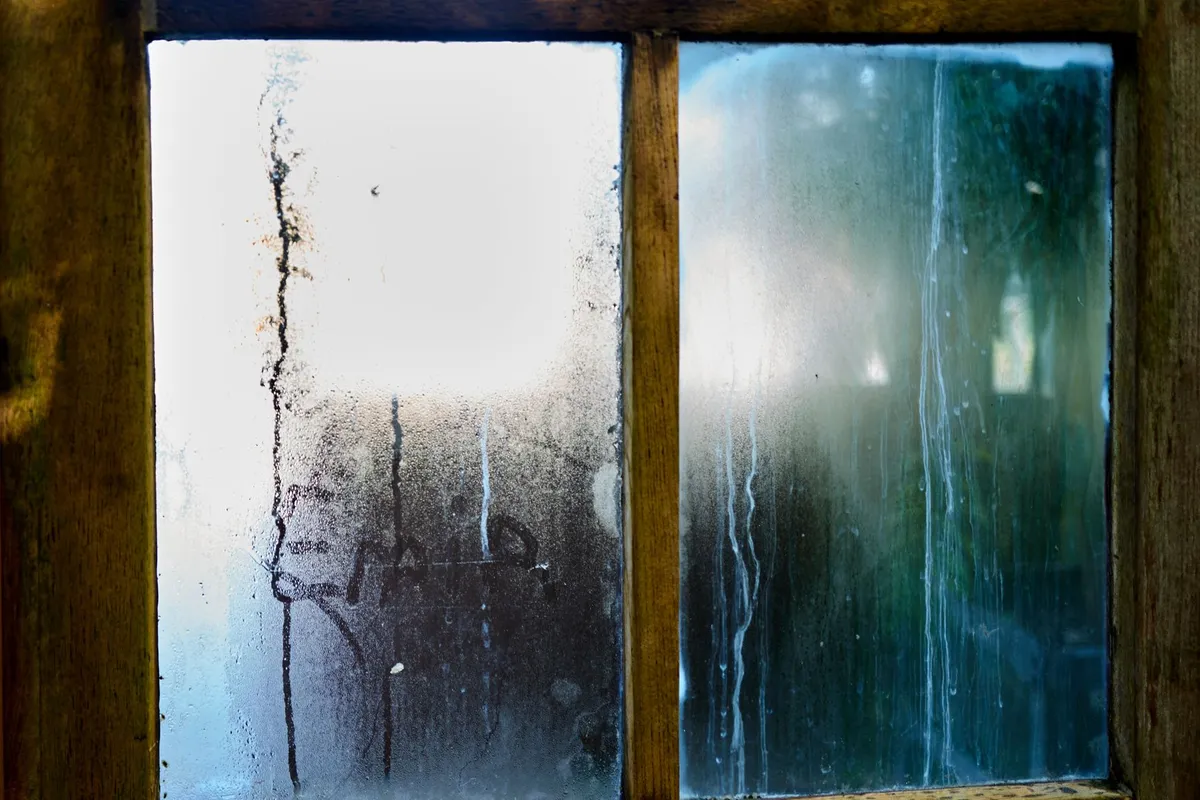
If you wake up to wet windows, that moisture is also settling on the coldest parts of your walls. Why mould keeps coming back explains how that happens, and what changes it.
How do you reduce the health risk from mould?#
Deal with the damp that feeds it. Cleaning mould off is worth doing, but on its own it doesn't stop it coming back:
“Simply removing surface mould will not prevent the damp and mould from reappearing.”
The World Health Organization's guidelines on dampness and mould also say that persistent dampness and microbial growth indoors should be avoided or kept to a minimum, as they may lead to adverse health effects.
In most homes the cause is condensation: moist air from cooking, showers and drying washing settling on cold surfaces. Running extractor fans, keeping trickle vents open and leaving a gap behind furniture all help. If the mould keeps coming back anyway, it's time to measure rather than guess.
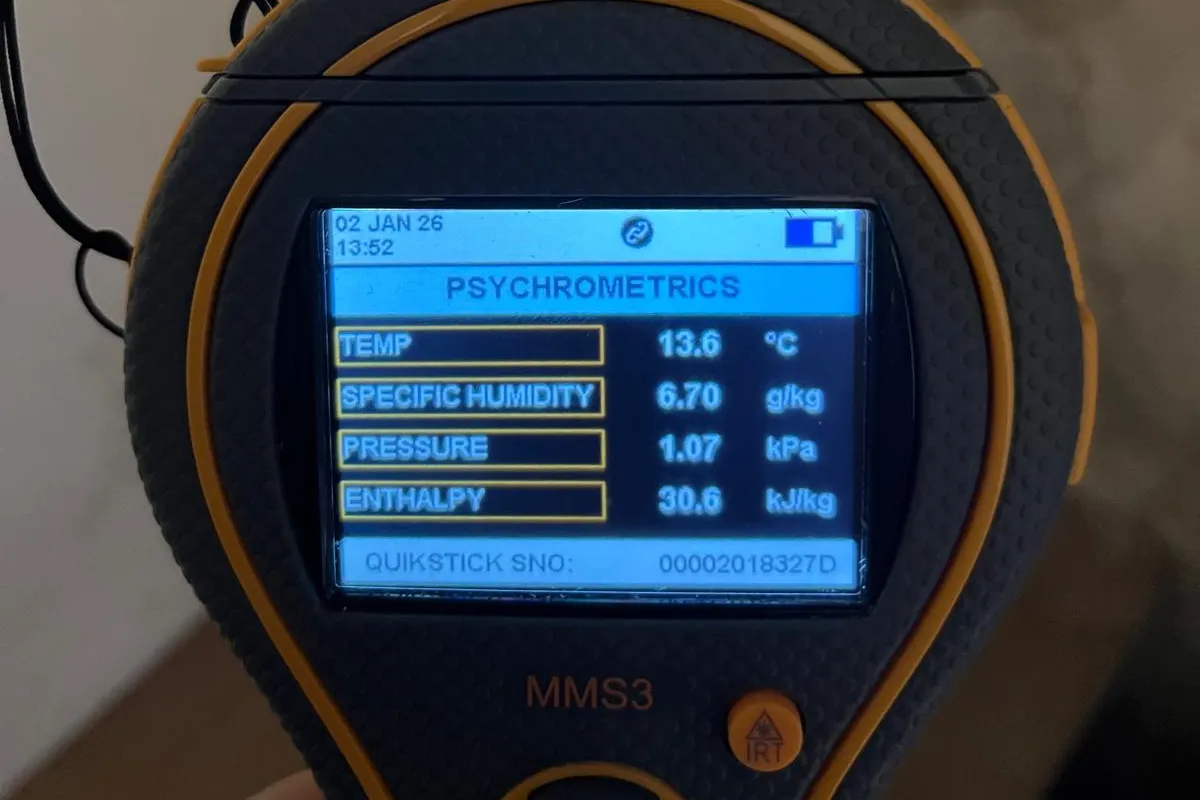
A mould survey measures relative humidity (how much moisture your air is holding, compared with the most it could hold), dew point (the temperature at which moisture in the air turns to water on a surface) and surface temperatures in the rooms you're worried about.
Your written report sets out what's causing the mould and what it will take to deal with it, usually better ventilation. In my experience, most mould problems don't need major work. They need the right fix in the right place. You're under no obligation to use anyone I recommend.
What if you rent your home?#
Tell your landlord about the damp and mould. The GOV.UK guidance says it is unreasonable to blame damp and mould on tenants' 'lifestyle choices', because everyday tasks like cooking and washing produce moisture.
If you rent privately, Shelter's advice on damp and mould says your landlord must try to find out what's causing the problem, and shouldn't tell you it's just condensation without checking.
If you're a private landlord, you already have legal duties around damp and mould, including under the Homes (Fitness for Human Habitation) Act 2018, and Awaab's Law is expected to be extended to private rentals.
An independent report can help both sides see what's causing the problem. See independent reports for tenants or mould surveys for landlords.
Questions people ask
Is it safe to sleep in a room with mould?
I can't give medical advice. The guidance says breathing it in is the main way mould affects health, so if you or someone you live with is in an at-risk group or has symptoms, speak to a healthcare professional and get the cause of the mould dealt with.
Can a mould survey tell me if mould is affecting my health?
No. A mould survey measures your home, not your health. It finds what's causing the damp and mould, and what it will take to deal with it. For questions about symptoms, speak to a healthcare professional, such as your GP.
What should I do if I think mould is affecting my child?
Speak to your GP about the symptoms, or contact NHS 111 if you need help urgently. In an emergency, call 999. Then get the cause of the damp and mould found and dealt with. If you rent, tell your landlord.
Is it safe to clean mould off yourself?
The GOV.UK guidance says mould can be removed from hard surfaces with an appropriate cleaning product, using a mould and mildew product rather than bleach. It also says whoever removes it should wear a mask, gloves and goggles. Cleaning deals with the mould you can see, so it's worth finding what's causing it too.
Sources
- Understanding and addressing the health risks of damp and mould in the home, GOV.UK
- Asthma, NHS
- Aspergillosis, NHS
- Indoor air pollution at home: damp and mould, Asthma + Lung UK
- WHO guidelines for indoor air quality: dampness and mould (executive summary), World Health Organization
- Damp and mould in private rented homes, Shelter
- Guide to the Renters' Rights Act: Awaab's Law, GOV.UK
- Homes (Fitness for Human Habitation) Act 2018, legislation.gov.uk
About the author
Duncan Ridley is qualified in water damage restoration (IICRC) and mould remediation (Dewpoint Professional). He spent 18 years as a technical advisor in the heating industry, after a long career in construction and heating systems, and works in structural drying, flood remediation and building fabric diagnostics. He carries out every Simply Filtered survey himself.
More about Duncan