

Ventilation for condensation and mould
Find out which ventilation your home needs, if any, before anyone sells you a system.
In short
Simply Filtered explains the main home ventilation options for condensation and mould: extractor fans, dMEV, dMVHR and PIV. Duncan Ridley's mould survey measures humidity, dew point and, where appropriate, airflow to show which option, if any, a home needs. Simply Filtered doesn't install ventilation: installation is carried out by trusted third parties or the customer's own contractor.
Sound familiar?
You know it's a ventilation problem. You don't know which fix.
- “The extractor fan runs, but the mirror still steams up.”
- “The windows are wet every morning.”
- “Someone's quoted me for a whole-house system.”
- “There are four types of unit and I don't know which I need.”
Buying the wrong system costs money and can leave the problem where it was. Measuring first tells you what your home actually needs, which is often less than you've been quoted.
Book your mould survey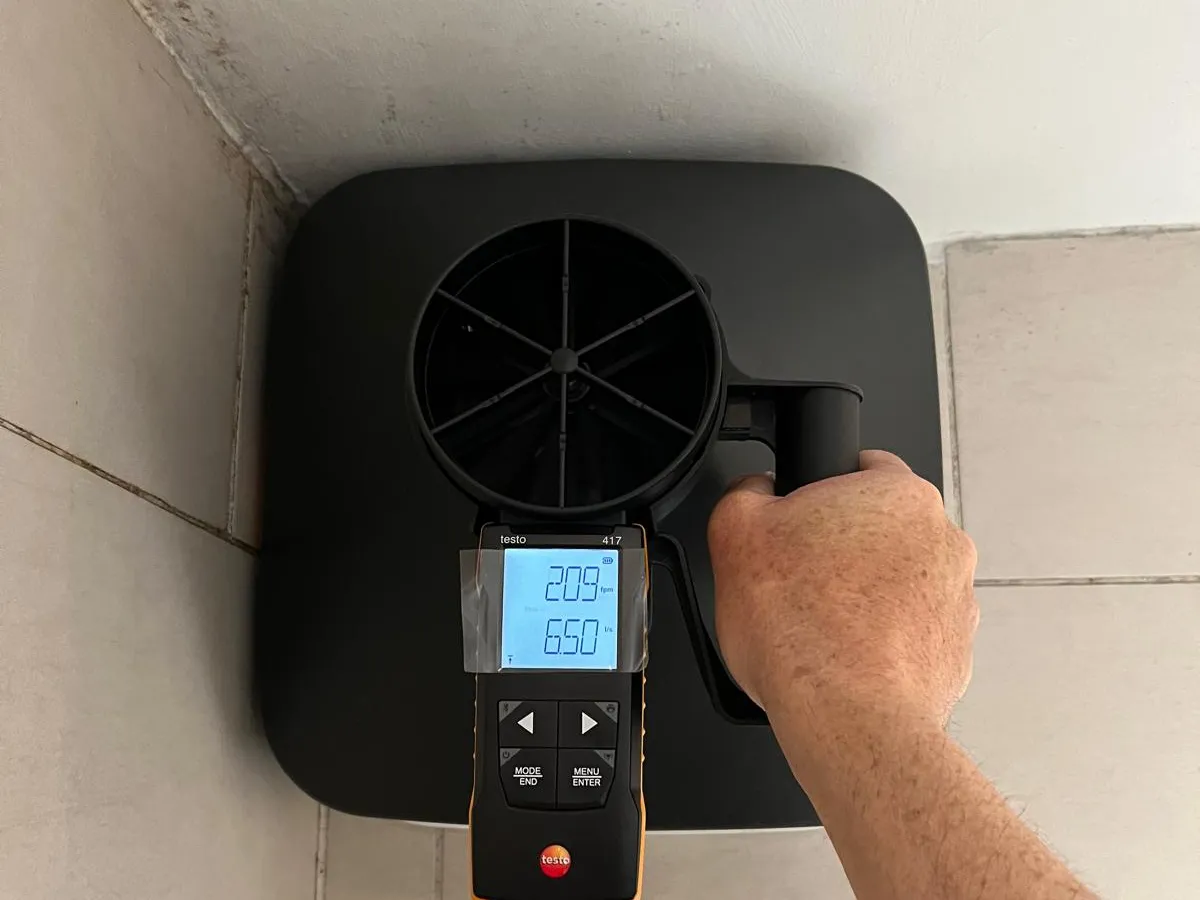
Start with the survey
Which ventilation does your home need?
It depends on where your moisture is made and where it settles. A mould survey measures relative humidity (how much moisture the air is holding, compared with the most it could hold) and dew point in the rooms you're worried about, so you can see which option, if any, fits.
Where appropriate, an anemometer (a meter that measures airflow) checks whether your existing extractor fans are actually moving air. Sometimes your fix is an existing fan that works properly, not a new system.
In my experience, most mould problems don't need major work. They need the right fix in the right place.
Book your mould surveyThe options
Extractor fans, dMEV, dMVHR and PIV, explained.
What each one does, the homes it tends to suit, and what's worth knowing before you choose.
Extractor fans
A fan that pulls moist air out of the room where the moisture is made.
What it does
Removes steam and humid air from kitchens, bathrooms and other wet rooms before it spreads through your home and settles on cold surfaces.
Tends to suit
- Bathrooms, shower rooms and en suites
- Kitchens and utility rooms
- Internal rooms with no window
Worth knowing
- An old or blocked fan can run noisily while moving very little air. Measuring the airflow shows whether yours is doing its job
- Fans with a timer or a humidity sensor keep running after you've finished, when the moisture is still there
- A fan needs air to replace what it removes, such as a gap under the door or an open trickle vent
dMEV
Decentralised mechanical extract ventilation: small fans in wet rooms that run all the time at a low, quiet rate.
What it does
Takes moist air out of your wet rooms continuously, rather than only when a fan is switched on, which helps keep humidity down across the whole home.
Tends to suit
- Homes with condensation in several rooms
- Older homes where ducting through the house isn't practical
- Households who want ventilation that doesn't rely on remembering to switch it on
Worth knowing
- It runs all the time, so it uses a little electricity continuously
- Like any extract system, it needs a way for fresh air to get in
dMVHR
Decentralised mechanical ventilation with heat recovery: a unit for one room that swaps stale air for fresh air and keeps much of the heat.
What it does
Takes stale, humid air out of a room and brings in fresh, filtered air, recovering heat from the outgoing air so the room isn't chilled.
Tends to suit
- Bedrooms, living rooms and single problem rooms
- Flats and homes without loft space for ducting
- Rooms where keeping the heat in matters
Worth knowing
- Each unit serves one room and needs a position on an outside wall
- The filters need cleaning or replacing to keep it working well
PIV
Positive input ventilation: a unit, usually in the loft or on a wall, that gently pushes filtered air into the home.
What it does
Supplies a steady flow of filtered air, which dilutes moist air and pushes it out through the natural gaps in your home.
Tends to suit
- Houses with a loft (loft-mounted units)
- Flats and homes without a loft (wall-mounted units)
- Homes with condensation spread across several rooms
Worth knowing
- It doesn't remove moisture where it's made, so kitchens and bathrooms usually still need extraction
- It suits some homes better than others, which is what the survey readings help decide
Questions
Questions about ventilation.
Can better ventilation stop condensation and mould?
It often makes the biggest difference, because it moves moist air out before it settles on cold surfaces. It can't fix a leak or a very cold wall on its own, which is why the survey looks at the whole picture first.
Do I need ventilation in every room?
Not usually. Most of the moisture in your home is made in the kitchen and bathroom, so that's often where extraction matters most. Your readings show whether other rooms need help too.
How do I know if my extractor fan is working?
Signs it isn't: steam lingers after a shower, the mirror stays misted, or the fan is noisy but weak. On a survey, an anemometer measures whether your fan is actually moving air.
What's the difference between dMEV and PIV?
dMEV pulls moist air out of your wet rooms, all the time. PIV pushes filtered air into your home, usually from the loft or an outside wall. They suit different homes, and some homes need neither.
Do you install ventilation?
No. Installation is carried out by trusted third parties or your own contractor. You can opt in to have quotes arranged when you enquire, and you're under no obligation to use anyone I recommend.
Next step
Find out what your home actually needs.
A mould survey measures the conditions in your home and tells you which ventilation, if any, will help. You're under no obligation to use anyone I recommend.
WhatsApp meOr call 07366 199261