
Window film
Does window film damage double glazing, and how do you get the right film?
It can, but it doesn't have to. The main risk is heat: some films make the glass absorb more of the sun's energy, and if part of a pane gets much hotter than the rest, it can crack. Whether that's a risk depends on your glass, so check it first.
By Duncan Ridley, Independent mould and condensation assessor, Simply Filtered
Published 27 September 2026 · Updated 29 September 2026 · 7 min read

In short
Window film can crack glass or cause other problems when it doesn't suit the glass it's fitted to. This guide from Duncan Ridley of Simply Filtered explains how that happens, which windows are most at risk, and how to find out what glass you have before you choose a film.
What is window film?#
A thin polyester film fitted to the inside or outside of your glass, most often to cut heat and glare from the sun. The Glass and Glazing Federation (GGF), the UK trade body for glazing, describes it like this:
“Window film is a base of clear polyester that is either dyed, extruded or metallised.”
The GGF's window film FAQs say it's applied to the inside or outside surface of windows and doors, to reduce heat and glare from the sun, increase comfort and security, and cut energy use. Whatever the film is for, it sits on your glass, so it has to suit that glass. Here's why.
How can window film crack glass?#
Through thermal stress: one part of a pane expanding more than another. When sun hits a window, the exposed middle of the glass warms up. The edges, tucked under the frame and in shadow, stay cooler. The warm middle tries to expand, the cool edge holds it back, and the edge ends up under tension. If that tension gets too high, the glass cracks.
The GGF's consumer guide to glass breakages lists this among the reasons any glass can break: the glass's thermal stress capability is exceeded by a large variation in temperature within the same pane.
Film matters because it can change how much of the sun's energy the glass absorbs. The International Window Film Association puts it plainly:
“Thermal stress, from absorption of solar radiation, is the one which film may affect.”
A film that absorbs more heat makes your glass run hotter in the sun, which widens the gap between the middle of the pane and its edges. Which windows are most at risk.
Which windows are most at risk?#
Windows of ordinary (annealed) glass, the standard type that hasn't been heat-treated, in full sun, where part of the pane runs hotter than the rest. The GGF's guide gives these examples of what causes a large temperature difference within a pane:
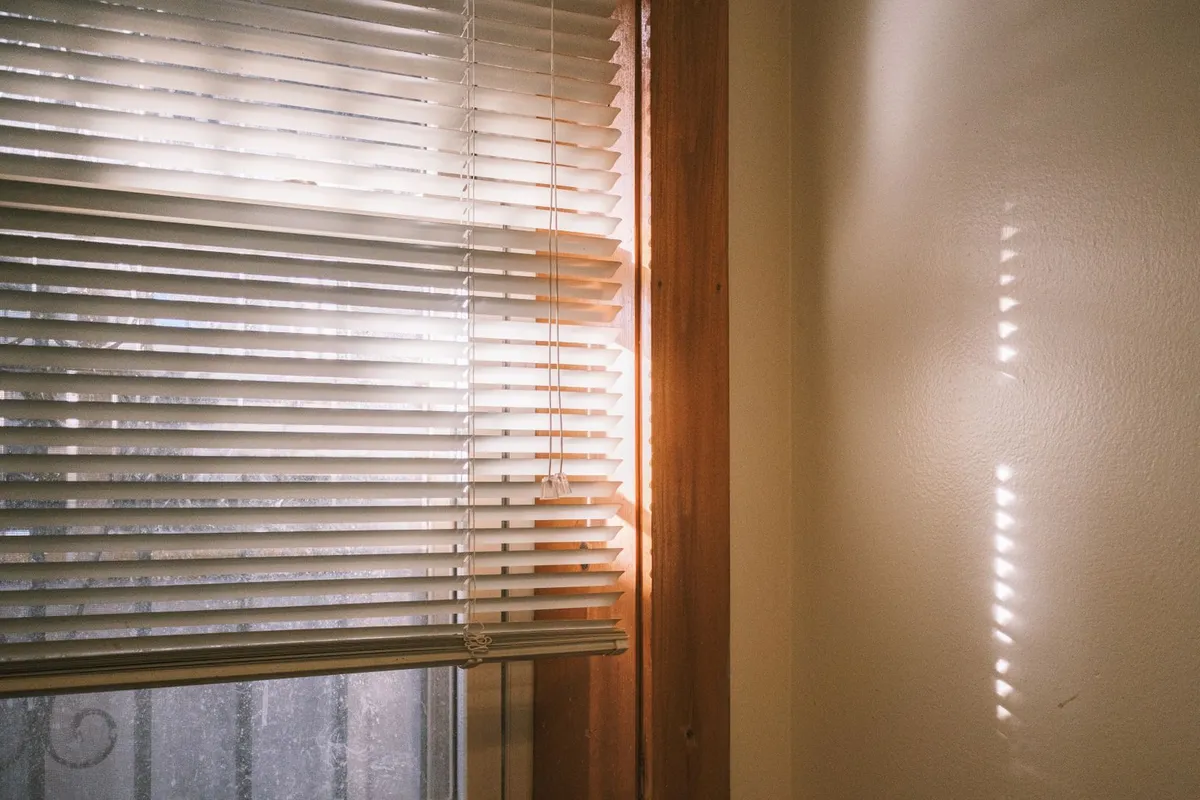
- Curtains, blinds or other structures close to the glass that cover part of it
- A poster, graphic, sign or paint covering part or all of the pane
Toughened glass (glass heat-treated to be stronger, which breaks into small fragments rather than shards) copes better. Glass maker Pilkington lists increased resistance to thermal stress compared to annealed glass among its properties.
Double glazing adds another layer to the question. A sealed unit has two panes, which can be different types, and one may have a Low-E coating. Film can go on the inside or outside surface, and the right film depends on what's in that particular unit. How to tell what's in yours.
Why does it matter what type of glass you have?#
Because the film has to suit the glass, and windows in the same house are often different. A newer back door may be toughened, an older bay may be ordinary glass, and a replacement unit may have a Low-E coating the others don't.
“With so many different types of glazing installed throughout the UK, it needs an expert to assess the possibilities and provide the best solution.”
- Ordinary (annealed) glass
- The standard type, which hasn't been heat-treated. It's the type most affected by thermal stress.
- Toughened glass
- Heat-treated to be stronger. It breaks into small fragments rather than shards, and copes better with thermal stress.
- Laminated glass
- Two panes bonded with a clear plastic layer, so the glass holds together if it breaks. From most angles it looks like ordinary glass, so it needs checking rather than assuming.
- Low-E coating
- An invisible microscopic coating that reflects heat back into your room, as the Glass and Glazing Federation describes it. Because it's invisible, you can't tell by looking whether your glass has one.
On Low-E windows, the International Window Film Association says whether film should be used depends on the type of Low-E surface, where it sits in the window, and what you want the film to do. None of those can be answered by looking at the window. How to find out.
What is the best type of window film?#
The one that suits your glass and does the job you need, whether that's cutting heat and glare, adding security or saving energy. There's no single best film for every window, because the same film can suit one pane and not the next.
Film manufacturers publish tables that match their films to glass types, and the IWFA suggests asking for a copy if you're ever in doubt. The final choice stays with your supplier or installer, and it's a far easier choice once they know exactly what glass they're fitting to. What to check before you buy.
What should you check before you buy window film?#
Check what glass you have, what the film maker says about it, and whether your windows carry a warranty. Then you can compare quotes on the same footing:
- Which type of glass is in each window you want to film
- Which film the installer is proposing, and the maker's guidance for that film on that glass
- Whether your window or double glazing warranty says anything about applied film
- Whether the room already has condensation or mould around the windows
The wrong film on the wrong glass can cost you more than no film at all. Fitting the wrong film to the wrong glass can cause cracking, failed double-glazing seals and voided warranties.
If there's already condensation or mould around your windows, deal with that alongside the film choice. Why mould keeps coming back explains how condensation works.
How do you find out what glass you have?#
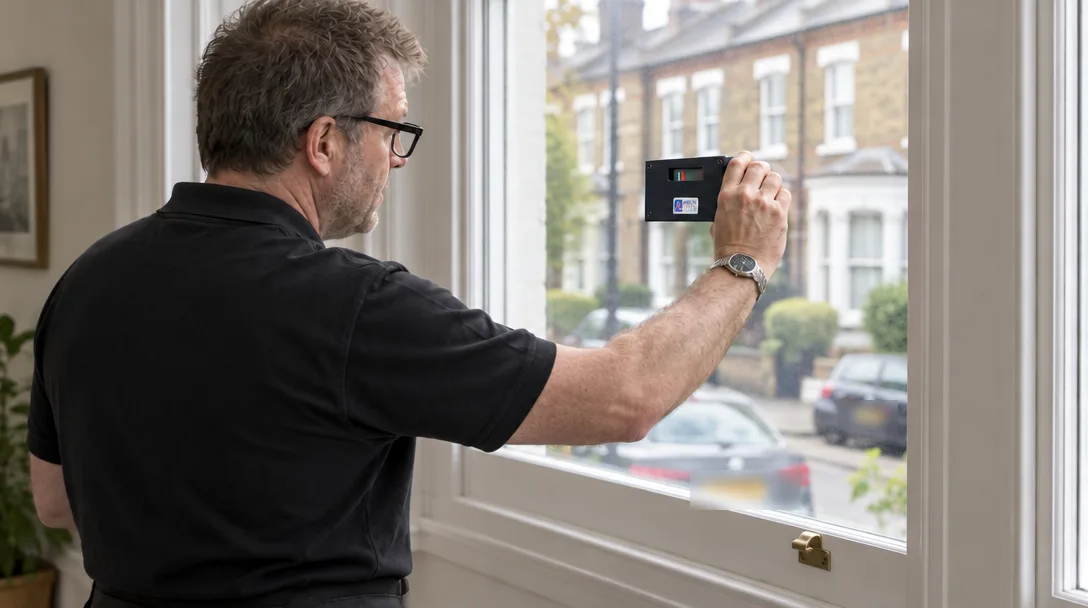
Have each window measured before you choose a film. On a window film survey I measure every window you ask about and record:
- The glass thickness
- Whether each pane is toughened or not toughened, tested with a Merlin Lazer toughened glass indicator (a handheld tester that shows whether a pane has been toughened, without damaging it)
- Laminated glass, where it can be identified
- The cavity gap (the space between the two panes) in double-glazed units
- Whether a Low-E coating is already present
You get a written report of the measured findings for each window. Take it to your own film supplier or installer, or I can pass it to local film suppliers who can advise and quote. Either way, the film advice you get is based on measurements, not assumptions. If you're a film supplier or installer, the same report gives you measured glass data before you quote. I've completed 3M window film training.
The survey is a diagnostic assessment and does not include installation or film supply. Toughened glass is reported as "toughened" or "not toughened"; the survey does not certify glass as safety glass or as meeting any British Standard. Final film selection and warranty stay with your supplier or installer. See what a window film survey includes and survey prices.
Questions people ask
How can I tell if my glass is toughened?
Look for a small mark etched into one corner of the pane, which toughened glass may carry. No mark doesn't always mean it isn't toughened, so a window film survey tests each pane with a toughened glass indicator instead. Laminated glass and Low-E coatings usually can't be identified by eye either.
Can't the installer just tell me what glass I have?
A good installer will ask, and may check. A measured report means you know before you choose, window by window, and you can compare quotes from different installers against the same information.
Do I need planning permission for window film?
Not normally. The Glass and Glazing Federation says planning permission is not normally required to apply window film. If you're unsure about your property, check with your council.
Will window film void my window warranty?
It depends on your warranty. The Glass and Glazing Federation's guide to glass breakages says whether a breakage is covered depends on the terms and conditions of sale and warranty you were given. Check yours, and ask your installer what their own warranty covers, before the film goes on.
Sources
- Window Film: Frequently Asked Questions, Glass and Glazing Federation
- Window Film Application and Solutions: advice for trade and consumers, Glass and Glazing Federation
- Glass Breakages: consumer guidance, Glass and Glazing Federation
- Low-E (Low Emissivity) Glass and Thermal Efficiency, Glass and Glazing Federation
- Pilkington Toughened Glass, Pilkington UK
- FAQ: window film and glass breakage, Low-E windows, International Window Film Association
About the author
Duncan Ridley is qualified in water damage restoration (IICRC) and mould remediation (Dewpoint Professional). He spent 18 years as a technical advisor in the heating industry, after a long career in construction and heating systems, and works in structural drying, flood remediation and building fabric diagnostics. He carries out every Simply Filtered survey himself.
More about Duncan