
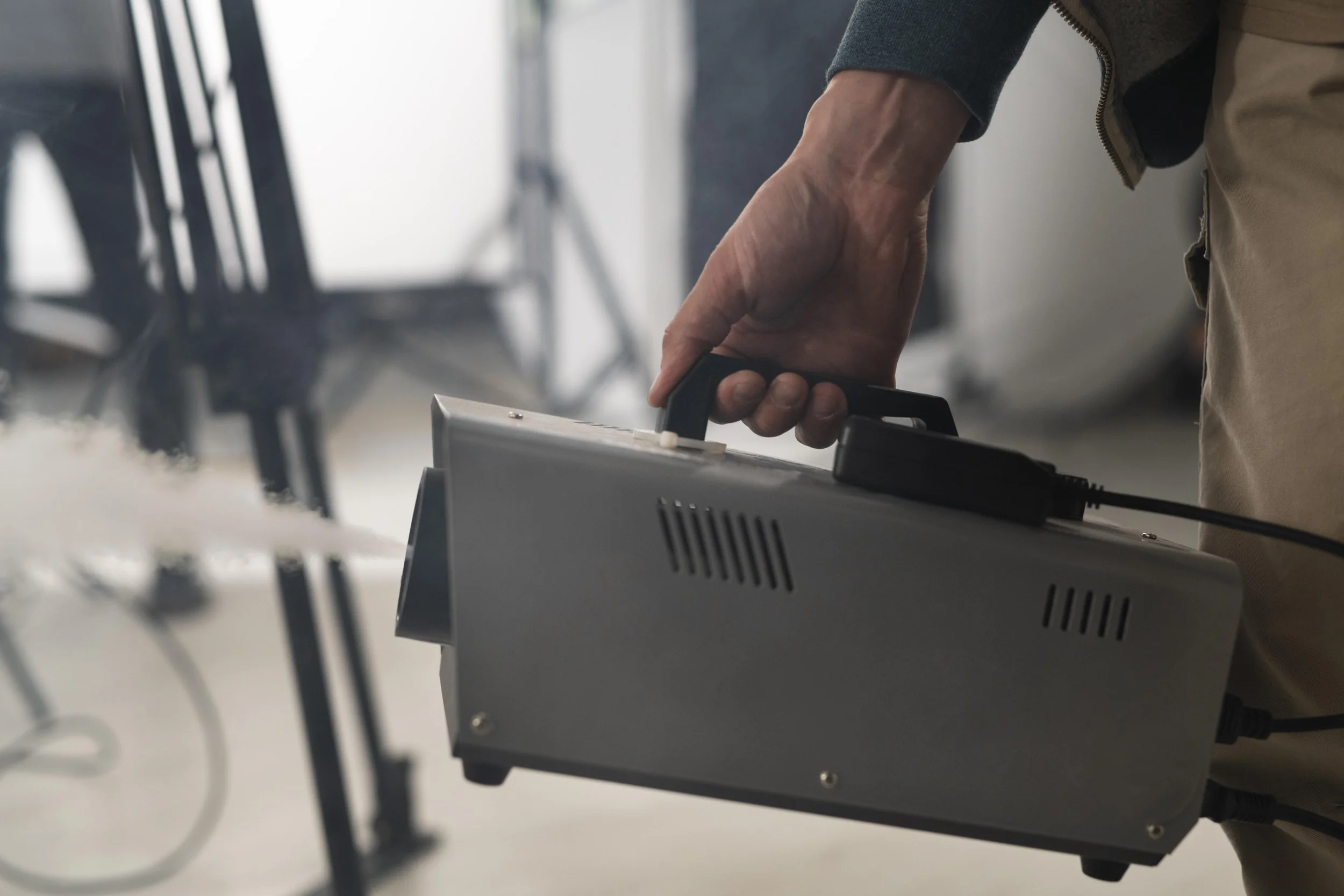
Professional Antimicrobial Fogging
For a safer, fresher, mould-reduced environment
What You Need to Know About Mould Spores
When mould grows, it doesn’t just sit on the surface, it releases thousands of tiny airborne spores that spread throughout your home or workplace. Even after visible mould is cleaned away, these microscopic spores can linger in the air and on surfaces, contributing to musty odours, triggering allergies, and allowing mould to return. That’s where professional antimicrobial fogging comes in.
At Simply Filtered, our team provide a specialist antimicrobial fogging service to help reduce airborne and surface mould spores after damp, leaks, or contamination.
When Fogging is Recommended
Fogging can be provided as a standalone service in appropriate situations, or as a final hygiene step following remedial works — we’ll advise honestly if it’s not appropriate.
Antimicrobial fogging is most effective after all remedial works are complete, including fixing leaks and removing any damaged or contaminated materials, and before redecoration begins. At this stage, the ultra-fine mist can reach all exposed areas and effectively neutralise lingering spores, bacteria, and microbes.
What to Expect
Our professional fogging process uses a fine-particle mist capable of accessing areas that traditional cleaning methods cannot reach, including:
Wall cavities
Ceiling voids
Underfloor spaces
Behind fitted units
Ventilation pathways
This process is designed to:
Reduce airborne and dormant mould spores
Lower microbial levels on treated surfaces
Improve the overall freshness and cleanliness of the environment
Provide peace of mind after a moisture or contamination event
We offer two high-quality formulations to suit different preferences:
Pine Fresh – a clean, lightly fragranced finish
Odourless – ideal for people sensitive to scents
Understanding Costs
The cost of antimicrobial fogging depends on the size of the property, the number of rooms or areas being treated, and whether the service is provided as a standalone treatment or following remedial works.
For this reason, fogging does not have a fixed price. Each treatment is assessed individually to ensure the appropriate coverage and formulation are used.
Where fogging is recommended following a survey or remedial work, this will be clearly explained. Standalone fogging requests are reviewed to confirm suitability before any treatment is arranged.
Fogging treatments are typically completed in a single visit.
Safe, Non-Toxic, Property-Friendly
We only use food-grade, biodegradable agents making the treatment safe for residential and commercial properties. For optimal coverage and results:
The property must be vacant (people and pets) for 3–4 hours
Doors, cupboards, and drawers should be left open
There is no need to move furniture
Who Benefits Most from Fogging
Antimicrobial fogging offers valuable reassurance for:
Households with infants, elderly residents, or immunocompromised individuals
People with asthma or sensitivities
Landlords and property managers preparing a safe, treated environment
Anyone wanting improved hygiene after damp or mould-related events
Important to Understand
No fogging or hygiene treatment can guarantee that mould will never return.
Mould spores exist naturally in all environments. Long-term control relies on effective moisture management, good ventilation, and addressing underlying damp issues.
Learn More
See Damp & Mould Survey for more information on how we identify moisture sources, ventilation issues, and causes of mould, providing clear reports, no scare tactics, no unnecessary work.
See Property Recovery & Support for guidance on proportionate next steps following damp, mould, or moisture-related issues, and how we can support you through the process.
See Ventilation to understand how improving airflow helps prevent mould returning.
Contact Us
If you’re considering antimicrobial fogging, we’ll help confirm whether it’s appropriate for your situation and explain what it can, and can’t, achieve.

FAQs - Antimicrobial Fogging
-
No. Fogging does not resolve the underlying cause of mould. It may be recommended as a supportive measure in specific situations, such as post-remediation or sanitisation, but only alongside addressing moisture or ventilation issues.
-
Fogging may be appropriate after mould removal, during change of occupancy, or where sanitisation is required. It is never recommended as a standalone solution without prior assessment.